Astrophotography by the Numbers: 1,302 Hours Under the Night Sky
An interactive look at 94 targets, 28,744 light frames, 209 observing nights, and 1,302 hours of captured exposure—the data behind my astrophotography archive.
Captured exposure1,302 h
Available light frames28,744
Observing nights209
Targets94
Confirmed integration561 h
Archive footprint4.71 TB
The raw light files add up to 54.2 full days with the shutter open.
What the frame count means
28,744 light frames—and the calibration frames behind them
An astrophotography archive contains several kinds of exposures. The headline count on this page covers the frames that actually record the night sky.
Main imagesLight frames
These are the repeated exposures of the target itself. They contain the photons that become the photograph, and stacking them builds signal and integration time.
Shutter-closed exposures made at a matching exposure time and sensor temperature. They help measure thermal signal and hot pixels.
1,698 retained dark framesCalibrationFlat frames
Evenly illuminated exposures that map vignetting, dust shadows, and other unevenness in the optical path.
5,656 retained flat framesCalibrationBias frames
The shortest possible dark exposures, used to characterize the camera's readout pattern when a calibration workflow calls for them.
686 retained bias frames
Dark, flat, and bias frames help correct the light frames, but they do not add sky signal or integration time. Their counts are therefore excluded from the headline light-frame total. These calibration totals count individual FIT/FITS exposures and exclude master files, logs, and other supporting files.
From intent to publication
From a capture plan to a gallery image
The sequence starts with what an automated session asked the camera to collect, then follows target projects through processing and publication.
1. How often the capture plan became data
Each automated run requested a set number of light frames. Weather, daylight, equipment, or a stopped sequence could end a session before the plan was complete.
89.2%19,490 of 21,857 planned light frames completed
2023
85%49 sequences
2024
92.6%105 sequences
2025
87%101 sequences
2026
100%6 sequences
216Finished42Paused Or Manually Stopped3Superseded By Next Sequence
2. How far each target project traveled
These are availability counts rather than a perfect cohort: older projects do not always retain every file or log from each earlier stage.
Archive target projects94100.0%Every distinct target represented anywhere in the archive
Targets with light data8691.5%Targets with retained sky exposures available to process
Master-light targets4446.8%Targets with at least one combined master-light file
Final-image targets3941.5%Targets with a processed final image retained in the archive
Dedicated gallery targets2526.6%Distinct targets with their own published gallery entry
What is a master light? It is the combined image created by aligning and stacking many calibrated light frames from a target.
3. How many retained frames reached the gallery
This compares the full retained light-frame archive with accepted-frame counts documented for dedicated gallery images. Lunar video frames are excluded because they are not comparable to the deep-sky light files counted here.
38.1%gallery-linked
Retained light frames
28,744
Documented in gallery images
10,958
Other retained light frames
17,786
Gallery records with frame evidence
20 of 24
The remainder is not simply waste. It includes frames lost to weather or image defects, exploratory targets that did not work, projects still awaiting more data or processing, older work without complete logs, and usable frames that were not part of a dedicated gallery image.
Capture timeline
When the photons arrived
Choose a year, then select a month to inspect the pace of capture.
2024554.2 h11,762 frames · 90 nights · 50 targets
November 202486.23 h3,045 frames across 11 nights and 6 targets
209 observing nights
The nights that built the archive
Each illuminated cell is a night with light frames. Select one for its totals.
JanFebMarAprMayJunJulAugSepOctNovDec
2023
2024
2025
2026
No captureUnder 3h3–6h6–10h10h+
January 17, 202623.23 h exposure329 frames · 1 targetTargetsXO-6b
All 94 targets
Explore where the time went
Search, filter by workflow stage, and rank every target by the measure that matters to you.
Target
Stage
Captured hours
Nights
Frames
Raw → final
58.7h
10
704
Raw → final
57.6h
12
3,191
Processing
56.4h
13
677
Raw → final
52.5h
9
815
Raw → final
51.1h
9
2,893
Raw → final
51.1h
10
613
Raw → final
44.4h
10
564
Raw → final
44.2h
10
578
Raw → final
43.3h
16
1,777
Raw → final
42.2h
9
506
Raw → final
37.8h
7
453
Raw → final
37.3h
6
447
Processing
36.7h
6
473
Raw → final
35h
12
455
Raw only
33.5h
3
856
Raw → final
32.9h
7
395
Raw → final
31.2h
8
593
Processing
28.9h
5
578
Raw → final
26.5h
4
466
Raw → final
25.6h
7
307
Raw → final
25.3h
6
303
Raw only
23.7h
4
284
Processing
23.1h
4
277
Raw only
21.1h
3
1,572
One target, two campaigns
What three times the integration reveals
The Veil Nebula offers a clearer exposure contrast: a 9h 40m stack from 2023 beside a 31h 55m stack from 2025. More accepted light gave the later edit more signal to work with, while two additional years of processing experience also shaped the result.
The later stack contains 3.30× as much integrated exposure. That is a meaningful increase in signal, but the visual change is not exposure alone—it also reflects more practiced processing choices.
What happened to the rest
The sessions that didn’t make the cut
A missing dedicated gallery page does not always mean a failed image. Some targets appeared in a collection or story; others were tests, disappointing results, monitoring projects, or good candidates for a longer-focal-length revisit.
Set asideTadpoles Nebula (IC 410)The result never felt visually interesting enough to take further.33.92 h confirmed integration
Published; worth revisitingMarkarian's ChainThis version appeared in my galaxy collection, but the galaxies were small and difficult to appreciate. I want to redo it with more focal length.18.17 h confirmed integration
Needs gallery reconciliationHeart Nebula (IC 1805)A finished Heart Nebula image exists in the website media archive, but it is not currently matched to a dedicated gallery page.12.42 h confirmed integration
Published in a collectionWhale Galaxy (NGC 4631)The image appeared in my galaxy collection, but the galaxy is small at this scale and did not justify a separate gallery entry.11.67 h confirmed integration
Planned revisitBubble Nebula (NGC 7635)The Bubble was very small in the earlier wide field. I plan to return with the new longer-focal-length telescope.11 h confirmed integration
Set asideChristmas Tree Cluster (NGC 2264)I did not like the finished result enough to keep developing it into a dedicated gallery image.6.42 h confirmed integration
Set asideSeagull Nebula (IC 2177)I did not like the finished result enough to keep developing it into a dedicated gallery image.6 h confirmed integration
Revisit at longer focal lengthLeo Galaxy GroupThe galaxies are too small at this image scale. I want to return with more focal length.2.33 h confirmed integration
Needs a stronger mosaicOrion's Belt mosaicThe mosaic did not come together the way I wanted. I need more capture and processing time with mosaics before revisiting it.1.45 h confirmed integration
Revisit at longer focal lengthHercules Globular Cluster (M13)The cluster is too small in the current field, so I am waiting for a longer-focal-length attempt.1.67 h confirmed integration
Revisit at longer focal lengthGlobular Cluster M3The cluster is too small in the current field, so I am waiting for a longer-focal-length attempt.1.67 h confirmed integration
Not enough signalSpaghetti Nebula (Sh2-240)I was not able to gather enough signal for a result I wanted to publish.2.25 h confirmed integration
Too faint for this setupCheshire Cat gravitational lensThe idea is fascinating, but gathering enough light for a satisfying result would require more time than I can reasonably give it with this setup.0.75 h confirmed integration
Monitoring projectT Coronae Borealis monitoring fieldThese baseline sessions monitor the recurrent nova T Coronae Borealis. The anticipated eruption was not recorded in this archive data.0.6 h confirmed integration
Published in a story4 VestaThis experiment became part of the Vesta photobomb story, but it is not a dedicated gallery target.4.92 h confirmed integration
Equipment testC11 test fieldThis is retained test data rather than a finished target project.4.17 h confirmed integration
Record does not map cleanlyM46 and M47 combined projectThe combined processing record does not map cleanly to the two separate cluster gallery pages.0.83 h confirmed integration
Final retained; no gallery matchM44 — Beehive ClusterThe processing work is retained in the archive, but there is not enough owner-reviewed context to assign a more specific outcome yet.0.45 h confirmed integration
Processed experimentNGC 1333The processing work is retained in the archive, but there is not enough owner-reviewed context to assign a more specific outcome yet.22.75 h confirmed integration
Processed experimentSh2-206 — Fossil Footprint NebulaThe processing work is retained in the archive, but there is not enough owner-reviewed context to assign a more specific outcome yet.22.4 h confirmed integration
Processed experimentSh2-157 — Lobster Claw NebulaThe processing work is retained in the archive, but there is not enough owner-reviewed context to assign a more specific outcome yet.5.42 h confirmed integration
Processed experimentM36 — Pinwheel ClusterThe processing work is retained in the archive, but there is not enough owner-reviewed context to assign a more specific outcome yet.0.33 h confirmed integration
Processed experimentNGC 7023 — Iris NebulaThe processing work is retained in the archive, but there is not enough owner-reviewed context to assign a more specific outcome yet.
A note on the numbers
Captured exposure is the shutter-open total from available light files. Confirmed integration is the latest successful stack found in the processing logs, so it can be lower than a gallery image's separately curated lifetime total. This snapshot covers the archive through August 18, 2026.
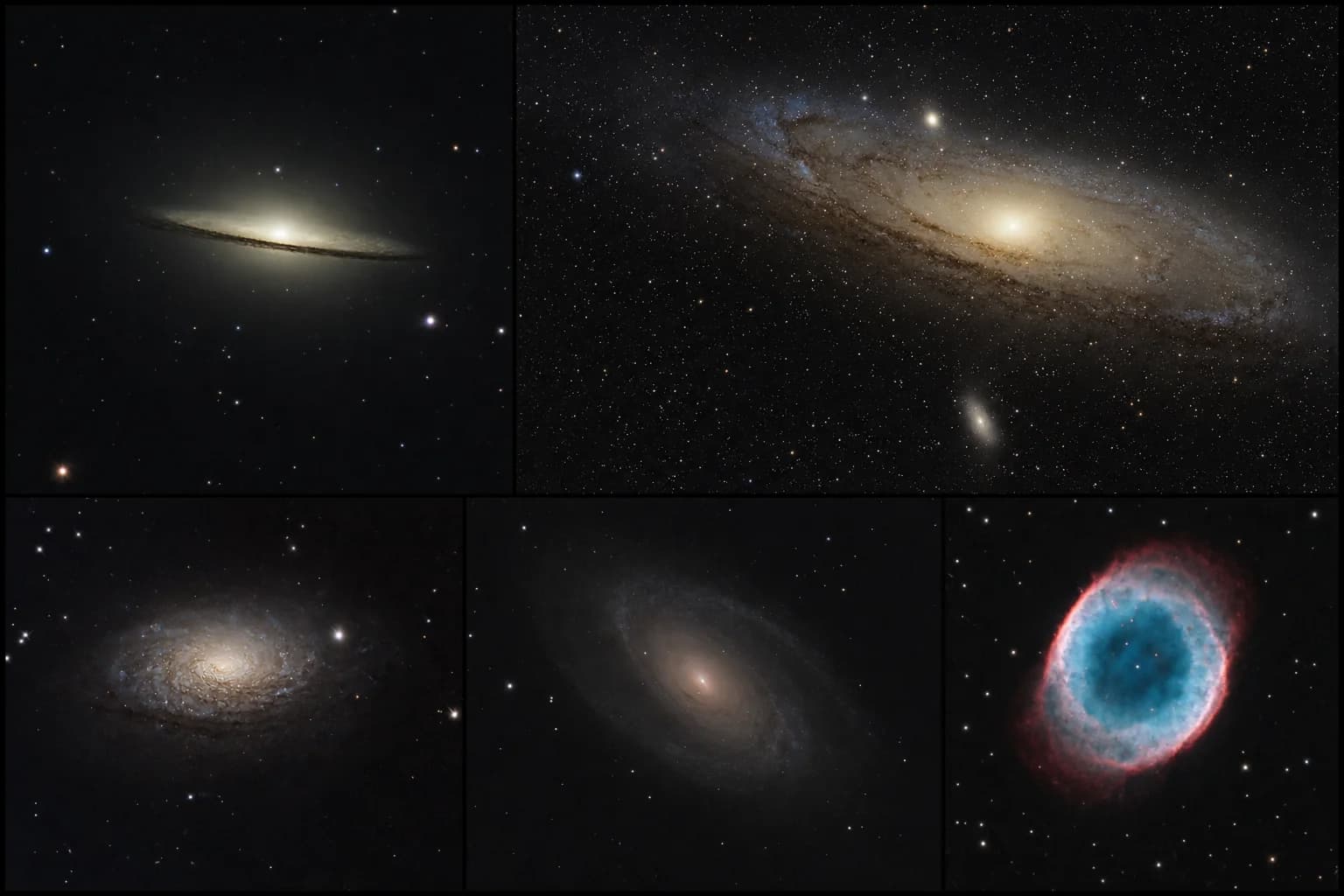
The gallery now includes a dedicated M81 / Bode's Galaxy image linked to the archive record: 506 five-minute light frames across nine observing nights (42.167 hours captured), with 439 accepted frames in the confirmed 36.583-hour integration. It complements the existing M81 + M82 paired field.
The new M63 / Sunflower Galaxy image uses 96 of 175 five-minute light frames: 8 hours integrated from 14h 35m captured for that final selection. The broader M63 archive record remains separate from this curated gallery stack.

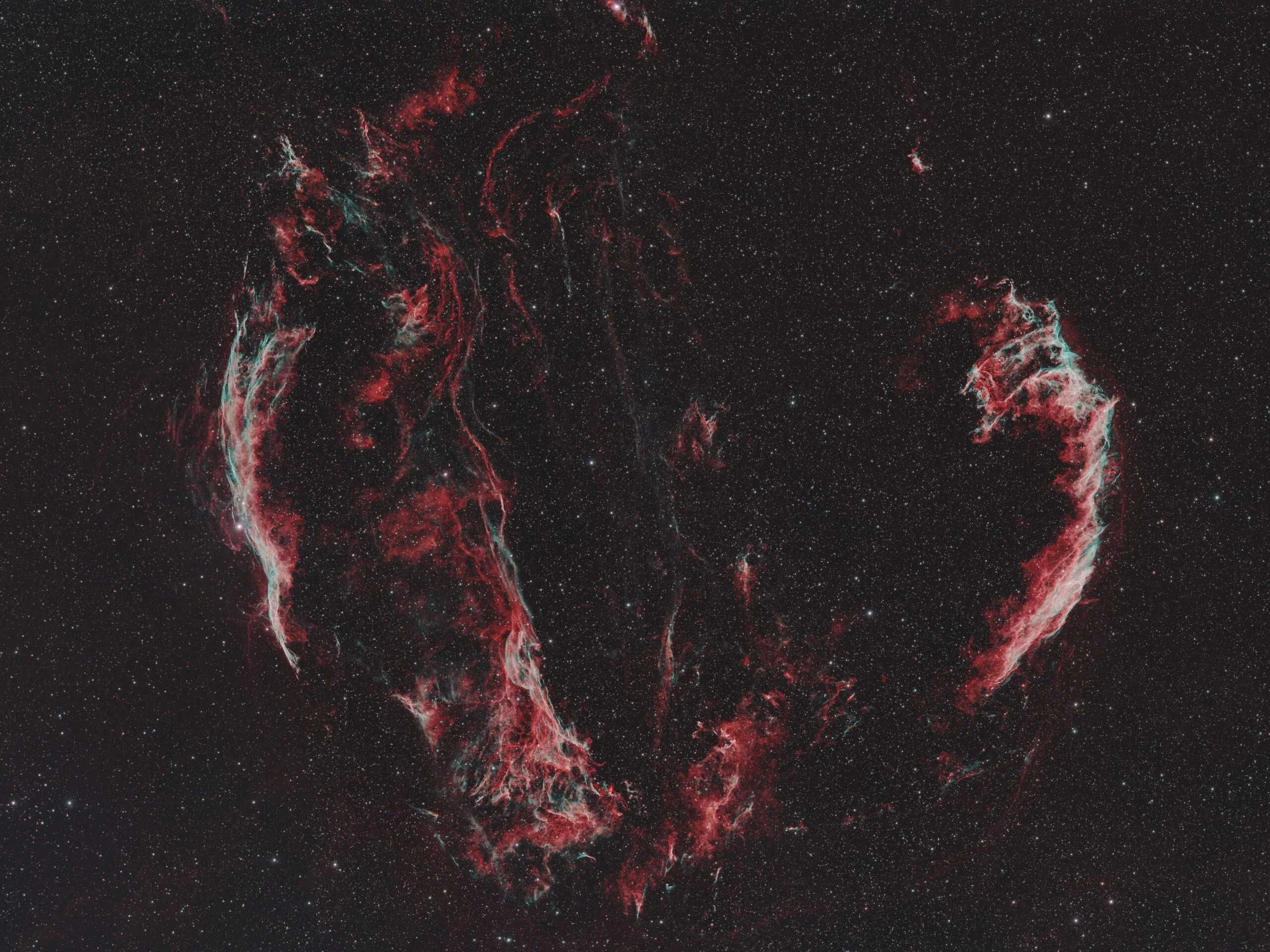 Early campaign9h 40m
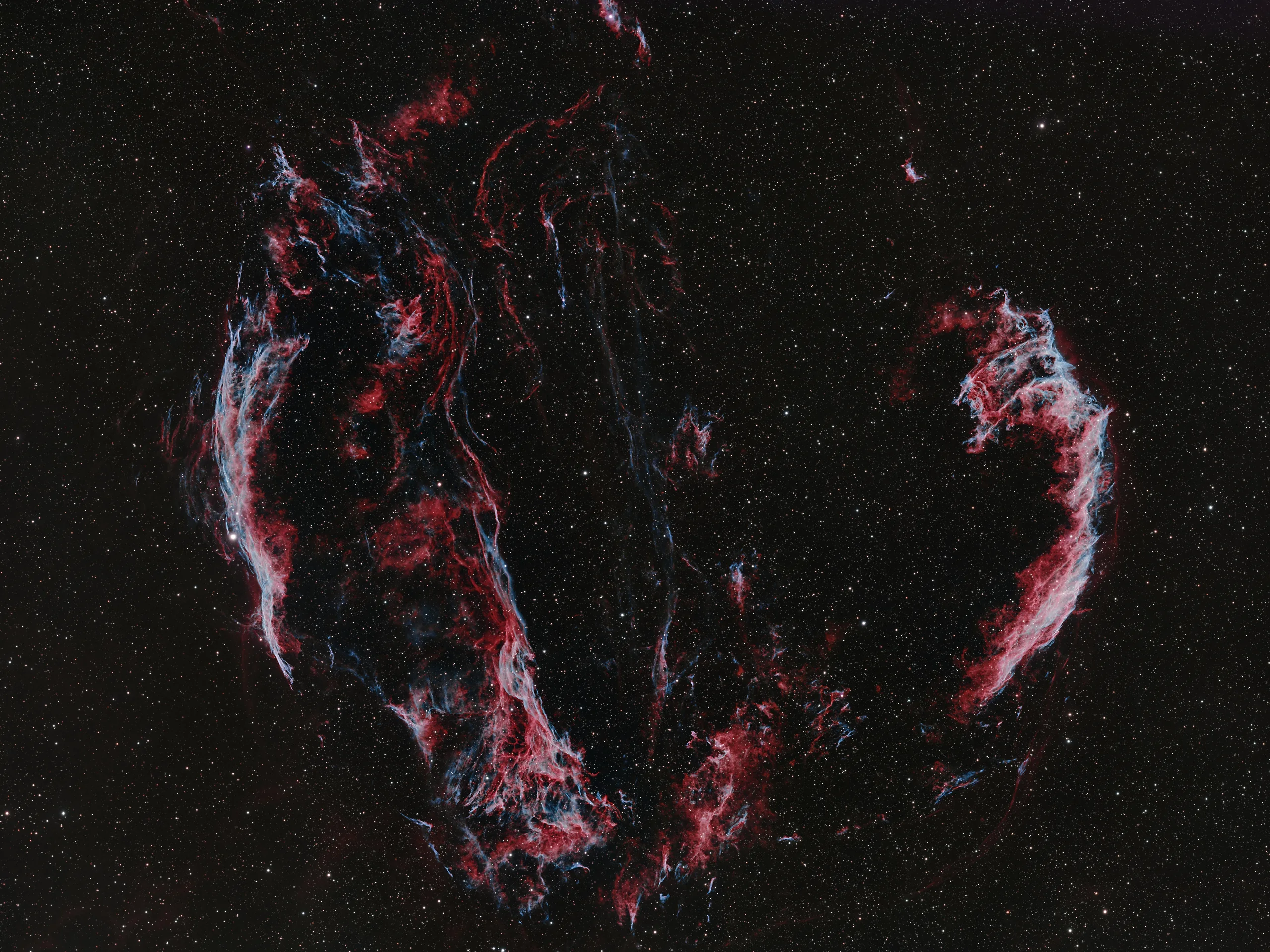 Deeper campaign31h 55m